
The film industry in Afghanistan, though still emerging and facing numerous challenges, reflects the nation’s rich cultural history and the resilience of its people. In recent decades, the industry has had to navigate the effects of war, political instability, and censorship. Despite these obstacles, Afghan filmmakers have managed to produce compelling films that shed light on the country’s realities, often garnering international recognition.
Table of Contents
The film industry in Afghanistan
The Early Years
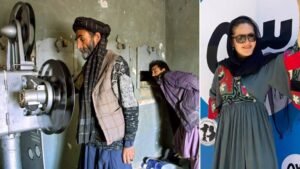
The Afghanistan film industry has its roots in the early 20th century. The first film company, Afghan Films, was established in 1968, contributing significantly to the growth of cinema in the country. During this period, cinema was embraced as a form of modernization, and a number of movie theaters were built across the nation’s cities.
The 1970s were a fruitful time for the Afghan film industry, with the production of numerous documentaries and feature films. These films often portrayed everyday life and cultural practices and offered social commentaries on the changing socio-political dynamics of the country.

The War Years and Taliban Rule
The Soviet invasion in 1979 marked the beginning of a tumultuous period for Afghanistan, affecting all aspects of life, including cinema. Many filmmakers left the country, and those who remained faced censorship and limited resources.
The situation worsened during the Taliban’s rule (1996-2001), where almost all forms of entertainment, including film and television, were banned. Cinemas were closed, film reels were destroyed, and filmmakers were persecuted. Despite these harsh conditions, some filmmakers risked their lives to preserve Afghanistan’s cinematic heritage by hiding film reels and equipment.

Post-Taliban Era: A Revival
After the fall of the Taliban in 2001, the film industry experienced a slow revival. Filmmakers returned from exile, cinemas were reopened, and international funding was secured for new projects. In 2003, Siddiq Barmak’s film “Osama” won the Golden Globe for Best Foreign Language Film, putting Afghan cinema back on the global stage.
Despite the progress, the film industry continued to face significant challenges, including limited resources, lack of professional training, and ongoing insecurity. In addition, societal norms and conservative views towards gender roles made it difficult for women to participate in the film industry.
Present Day
Today, the Afghanistan film industry is navigating new uncertainties with the Taliban’s return to power in 2021. Many filmmakers and artists have left the country, fearing persecution and the return of strict censorship laws. The fate of the country’s film industry hangs in the balance, reflecting the broader uncertainties faced by the nation.
However, Afghan filmmakers continue to show resilience, determined to tell their stories to the world. Many have been recognized at international film festivals, and a new generation of filmmakers, both within and outside the country, are finding innovative ways to create and distribute their work.
Films like “The Patience Stone” by Atiq Rahimi, “Wolf and Sheep” by Shahrbanoo Sadat, and “A Thousand Girls Like Me” by Sahra Mani showcase the diverse themes and styles of contemporary Afghan cinema, covering topics such as gender, war, and social change.
In conclusion, while the Afghanistan film industry faces many challenges, its journey is a testament to the power of cinema in expressing a nation’s identity, resilience, and creativity. It illustrates how filmmakers, despite adversity, continue to use their craft to explore complex social realities, stimulate dialogue, and inspire change.
Notable films from Afghanistan’s film industry:
Afghanistan’s film industry, despite its turbulent history and constraints, has produced a number of notable films that have gained both local and international acclaim. Here are some of the standout films:
- “Osama” (2003) – Directed by Siddiq Barmak, this is the first film to be shot in Afghanistan after the fall of the Taliban. The film tells the heartbreaking story of a young girl who disguises herself as a boy, Osama, to work and support her family under the oppressive Taliban regime. The film won the Golden Globe for Best Foreign Language Film in 2004, drawing international attention to Afghanistan’s nascent film industry.
- “The Patience Stone” (2012) – This film, directed by Atiq Rahimi based on his own novel, explores the inner life of a woman caring for her comatose husband amidst the chaos of war. The woman begins to reveal her deepest desires, fears, and secrets to her husband, using him as her “patience stone.”
- “Wolf and Sheep” (2016) – Directed by Shahrbanoo Sadat, this film weaves magical realism into a story of rural life in Afghanistan. It won the main award at the Director’s Fortnight section of the Cannes Film Festival in 2016.
- “A Thousand Girls Like Me” (2018) – This documentary by Sahra Mani tells the powerful story of a young woman, Khatera, who fights against societal norms and legal systems to seek justice after being sexually abused by her father.
- “Kabul, City in the Wind” (2018) – Directed by Aboozar Amini, this documentary presents an intimate and poignant portrait of daily life in Kabul through the eyes of two young boys and a bus driver.
- “Hava, Maryam, Ayesha” (2019) – Directed by Sahraa Karimi, this film tells the story of three Afghan women from different social backgrounds, living in Kabul and facing a big challenge in their lives.
These films have not only won critical acclaim but have also played a crucial role in highlighting the rich cultural narratives of Afghanistan and the resilience of its people amidst the country’s ongoing socio-political challenges.
#Acting #ActingGurukul #Gurukul #GurukulOnlineLearningNetwork