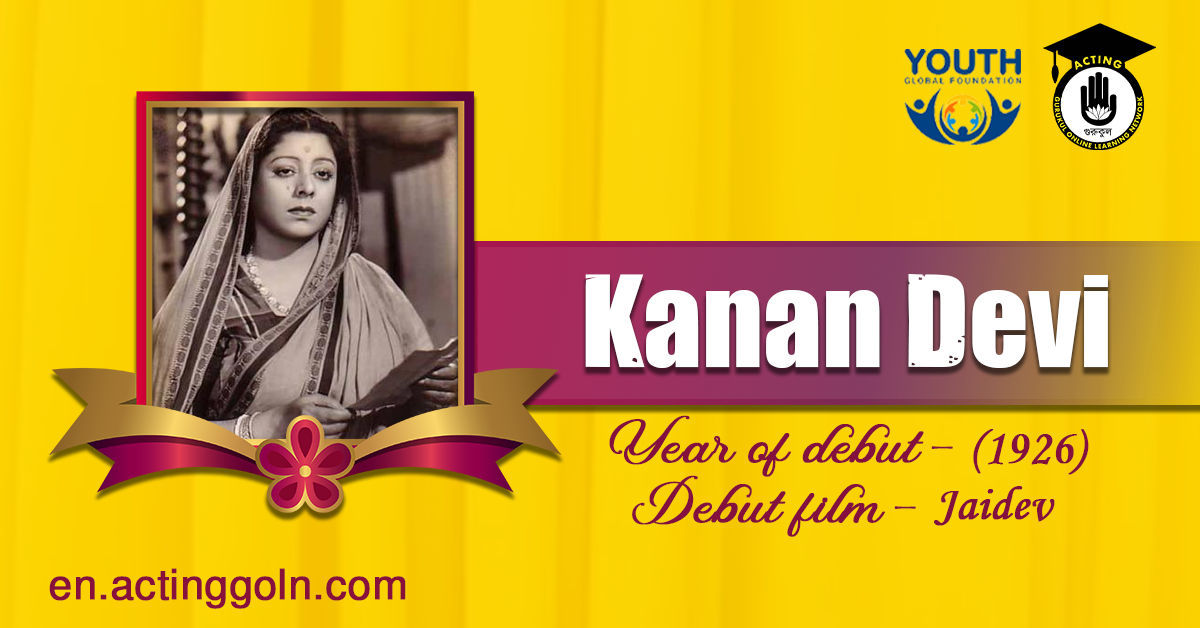
Born as Kananbala on 22 April 1916 in Howrah, West Bengal, Kanan Devi was among the early singing stars of Indian cinema and an iconic figure in the Bengali film industry. She began her life in humble circumstances, facing numerous struggles in her early years, which would later play a crucial role in shaping her formidable career.
Film Career:
- Debut & Silent Era (1926): Kanan Devi began her career as a child artist in 1926, with the film ‘Jaidev.’ It was the silent era of cinema, and Kanan was around 10 years old when she made her debut.
- Transition to Talkies: With the advent of talkies, her singing talent became a significant asset. She successfully transitioned from silent films to talkies and emerged as a leading actress-singer of the 1930s and 1940s.
- Major Breakthrough: Kanan Devi’s major breakthrough came with the film ‘Mukti’ (1937), where she starred opposite P.C. Barua. Her melodious voice and acting talent made her an instant hit. The film’s songs, particularly those sung by Kanan Devi, were immensely popular.
- Subsequent Films: Over her career, she worked in several memorable films like ‘Vidyapati’ (1937), ‘Street Singer’ (1938), ‘Savitri’ (1937), ‘Jawab’ (1942), ‘Shankar Parvati’ (1943), and ‘Nurse’ (1943), among many others.
- Contributions to Bengali Cinema: Kanan Devi was not just an actress; she was also a producer and played a pivotal role in the promotion of the Bengali film industry. She produced several films under the banner of her production company, Shrimati Pictures.

Musical Contributions:
Kanan Devi’s melodious voice was one of her standout features. She was trained in Rabindra Sangeet and was one of the early playback singers in the Indian film industry. Her singing style, which was deeply rooted in the Indian classical tradition, was popular among the masses. Some of her most remembered songs include “Bhulite Parina,” “Diner Sheshe,” and “Amar Nayan Tabo.”

Personal Life & Legacy:
Kanan Devi’s personal life was marred with challenges, including dealing with the societal norms of her time that often looked down upon actresses. Despite these hurdles, she established herself as a respected figure in the Bengali film fraternity.
She received multiple honors and awards in her lifetime. In 1968, she was awarded the Padma Shri by the Government of India for her contributions to the arts.
Kanan Devi breathed her last on 17 July 1992, leaving behind a legacy that continues to inspire many in the world of Indian cinema. Her life story is a testament to resilience, talent, and the indomitable spirit of a woman who carved a niche for herself in an industry that was still in its formative years.